The second prompt in the collection, and it is almost exactly the opposite shape of the first one. That was a single run-on paragraph of about two hundred words, most of them spent arguing the model out of its defaults. This is four hundred and thirty words in nine paragraphs, and it barely argues with anything at all.
Read the paragraph breaks and you can see what it actually is: a spec sheet. One paragraph for framing, one for hair, one for the face, one for skin, one for the ear jewellery, one for the top, one for the room, one for the light, one for the camera. Nothing is implied and almost nothing is forbidden. It simply describes, item by item, everything that ends up in the picture.
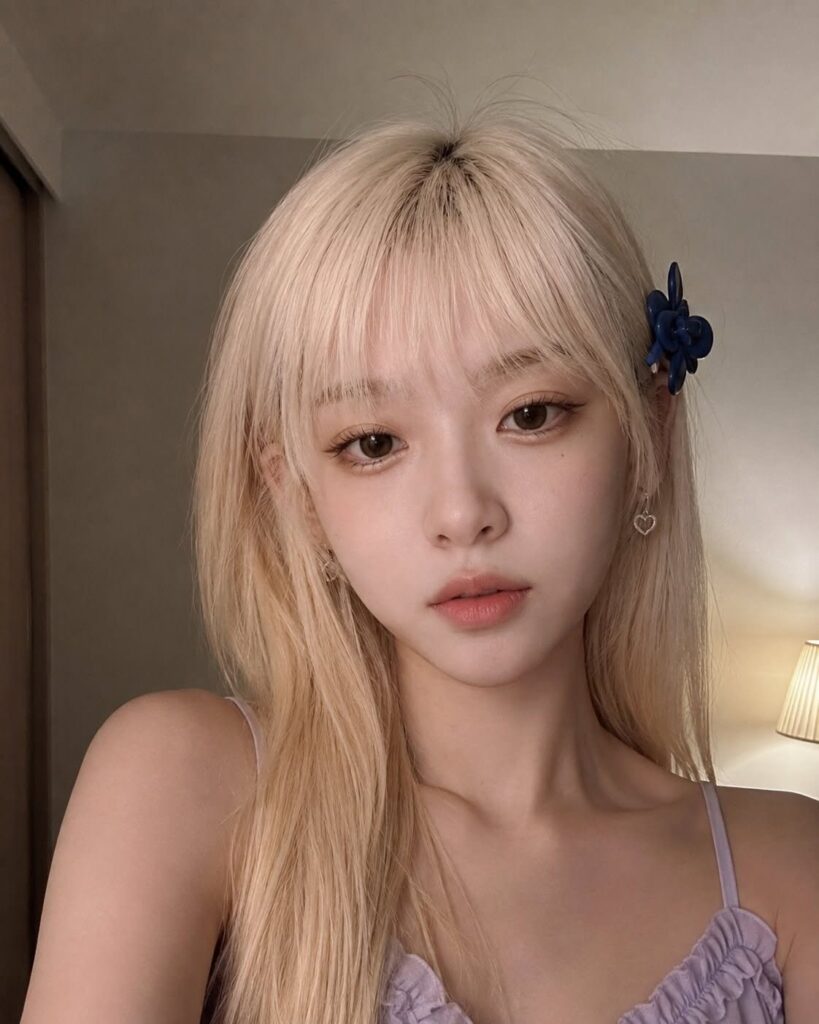
Where it spends its words is the interesting part. An entire paragraph goes to skin — pores, skin grain, highlights on the nose tip, subtle colour variation across the cheeks, natural shifts in tone. Nothing else gets that much attention, and it is not hard to see why: plastic, airbrushed skin is the single thing that makes a generated face read as generated. That paragraph is not really describing skin, it is attacking one specific failure. And it works. The skin here has texture in it.
The trade is repeatability against surprise, and it runs the opposite way from the first prompt. The navy flower clip, the mismatched earrings, the lamp behind her shoulder, the dark door frame on the left — all of it is pinned down in the text, so a second run would land somewhere very close to this. Whereas the best thing in the first prompt’s two runs was a gesture it never asked for. There is nothing in this picture I did not ask for. That is what the precision costs, and it is worth knowing you are paying it.
One more thing, and I genuinely do not know whether it was deliberate: there is no writing anywhere in this frame. The tell in the first post was the graphic printed on the t-shirt, which reads as words at a glance and falls apart the moment you look at it. This prompt specifies a bedroom, a lamp, a hair clip and a plain strap top, and never once puts text into the scene. If letters on fabric are the thing these models still cannot do, then a scene with no letters in it is one fewer thing that can go wrong. I will be watching for that in the ones that work from now on.
What is still soft, if you go looking for it: the crown of the head, where the hair parts. Individual strands are convincing everywhere else — the prompt asks for them by name, twice — but at the point where they all converge it goes slightly abstract, and the parting reads more like an idea of a parting than a real one. Faces are solved. Skin is solved. Hair, at the exact place it meets the scalp, is not quite there.